/666/1/0c439a0bb4415807ce29_logo.png)
/666/1/23b7333f19b0ba14d134_nissan-logo.png)
A history of LEAF
The Nissan LEAF: A Trailblazer’s Journey — From Hatchback to Crossover EV
Broadstairs, UK — The story of the Nissan LEAF is one of innovation, ambition, and transformation—a journey that began in 2010 and continues to shape the future of electric mobility.
Unveiling a Global Pioneer (2009–2010)
The LEAF was officially unveiled on 1 August 2009 as the world’s first mass-market, series-produced battery-electric vehicle. Production began later that year at Nissan’s Oppama plant in Japan, followed by rollouts in December 2010 across Japan, Europe, and the U.S.
The First Generation (2010–2017): Breaking Ground
At launch, the LEAF featured a 24 kWh lithium-ion battery with a range of about 124 miles on a full charge. It quickly captured global attention, securing awards such as European Car of the Year 2011, World Car of the Year 2011, and Japan Car of the Year 2011–2012.
In 2012, Nissan introduced Vehicle-to-Home (V2H) technology, allowing the LEAF to power homes during outages or expensive peak-rate hours.
That same year, efficiency improvements increased range to about 141 miles. By 2015, a larger 30 kWh battery lifted the range to around 174 miles, while safety innovations like Intelligent Emergency Braking were added.
LEAF Goes Global and Evolves (2013–2019)
By early 2013, production had expanded to Tennessee, USA, and later to Sunderland, UK. Global adoption accelerated, with the LEAF passing half a million units sold by 2020—avoiding an estimated 2.5 billion kilograms of CO2 emissions.
In 2017, the second-generation LEAF was unveiled. It delivered 38% more power, 26% more torque, and introduced features like the e-Pedal (one-pedal driving) and ProPILOT driver-assist. Crucially, it offered up to 250 miles of range—doubling its early capability.
Expansion of Capabilities & Special Editions (2018–2019)
In 2018, Nissan debuted the LEAF NISMO RC, a dual-motor AWD performance concept. That same year, Nissan expanded into smart-grid technology and energy partnerships under the Nissan Energy banner.
By 2019, the LEAF e+ arrived with a 62 kWh battery, extending range up to 285 miles—cementing its position as one of the most practical EVs on the market.
Global Sales & Legacy (2019–2022)
By 2022, global sales had surpassed 577,000 units, making the LEAF the best-selling electric vehicle in history until overtaken by the Tesla Model 3.
Third Generation & the Future (2025–2026)
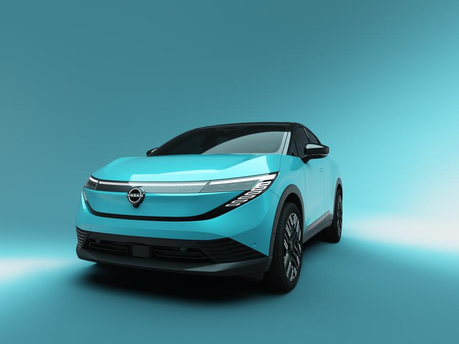
Nissan is now preparing to launch the third-generation LEAF, which takes the form of a sleek compact SUV built on the CMF-EV platform at the Sunderland, UK plant as part of Nissan’s EV36Zero hub.
Set to arrive in autumn 2025 with sales beginning in 2026, the new LEAF will offer:
- A 75 kWh battery with up to 375 miles of range
- A 52 kWh version offering around 270 miles
- 150 kW DC fast charging and full Vehicle-to-Grid (V2G) capability
- A strikingly aerodynamic design (Cd ≈ 0.25) and twin 14.3-inch Google-integrated screens inside.
Looking Ahead
From its modest hatchback roots with just 124 miles of range, to a soon-to-launch SUV capable of nearly 400 miles per charge, the Nissan LEAF remains a pioneer in electric driving. Its evolution tells the story not just of Nissan’s innovation, but of a global shift toward sustainable mobility.
Quick Timeline
| Year | Milestone |
| 2010 | Launch, 124-mile range |
| 2012 | Efficiency upgrade to 141 miles |
| 2015 | 30 kWh version, 174 miles |
| 2017 | 2nd generation, up to 250 miles + e-Pedal/ProPILOT |
| 2019 | LEAF e+, 285 miles |
| 2020 | 500,000+ global sales |
| 2022 | 577,000+ sold worldwide |
| 2025-2026 | 3rd-gen SUV LEAF, up to 375 miles |